Give terracotta pots a painted rim
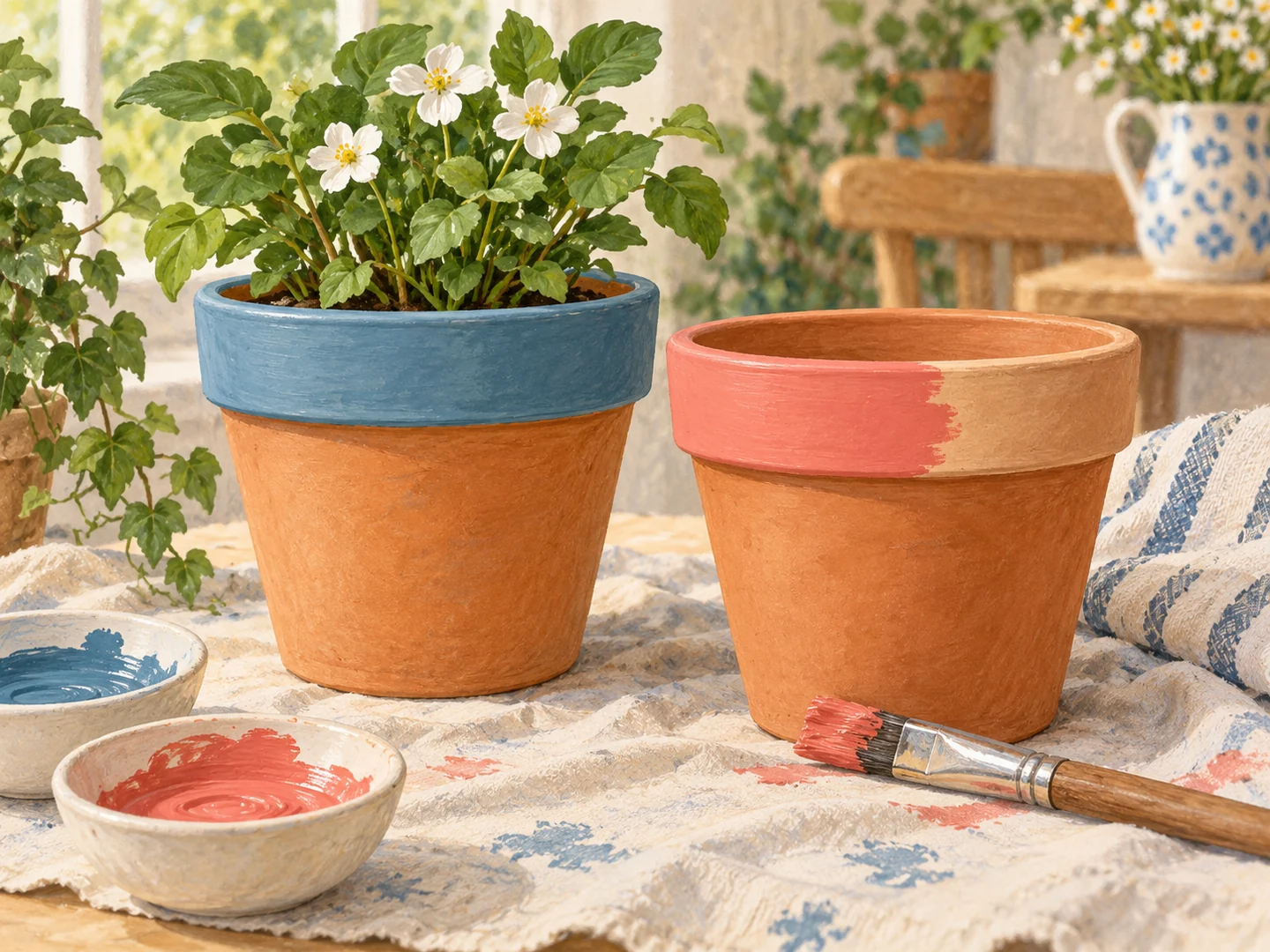
Paint only the rim of a terracotta pot for a small color accent that leaves most of the clay visible.
A small area makes the color easier to choose
A painted rim gives an ordinary terracotta pot a different character without hiding the material underneath. Cream looks quiet against reddish clay; a clear green or blue makes a more noticeable border. Hold a strip of colored paper around the rim before opening any paint. The color may look quite different beside the plant than it did on a screen.
Begin with an empty, sound pot. A cracked rim will not become stronger under paint, and crumbly clay makes a poor surface. Clean off soil and loose deposits using a method suitable for the pot, then allow it to dry thoroughly. For a first attempt, a new unglazed pot is easier to assess than one that has spent years outdoors.
Mask the shape you already have
The pot's molded rim provides a useful guide, so there is little need to measure a stripe around a tapered body. Apply painter's tape just below the rim, working in short lengths around the curve. Press the edge carefully without stretching the tape. If the clay is very rough, expect a softer painted edge rather than the precision of a line on glass.
Choose a coating whose label includes terracotta and the intended indoor or outdoor setting. Follow its surface preparation, primer and drying instructions. Use a small brush and light coats so paint does not gather beneath the lip. Keep the drainage hole open and avoid painting the soil-facing interior unless the product is specifically suitable for that purpose. The decorative border does not make the pot waterproof.
Remove the tape according to its instructions and the coating's working time. Pulling it away while a thick ridge bridges the tape and clay can tear the finish. A little unevenness suits this project; repeatedly brushing a half-dried line often makes it lumpier. Let the paint complete its stated cure before returning the pot to use.
Give the finished pot a sensible home
Use a saucer that actually protects the furniture below, and check it after watering. A rim painted in outdoor paint is still only one part of a pot exposed to moisture and weather. If you want to keep the decoration sheltered, place a nursery pot inside the terracotta one and remove it for watering, allowing excess water to drain before replacing it.
For a group, repeat the rim color on two pots and leave a third plain. There is no need to paint every planter in a collection. Put the pots together before deciding whether another stripe or pattern is missing; the leaves, clay and space between them already contribute plenty of detail.