Style a picture ledge without filling every inch
A narrow shelf can hold a changing collection of prints. The trick is leaving enough space for each frame to make sense.
Start with the shelf, not a pile of frames
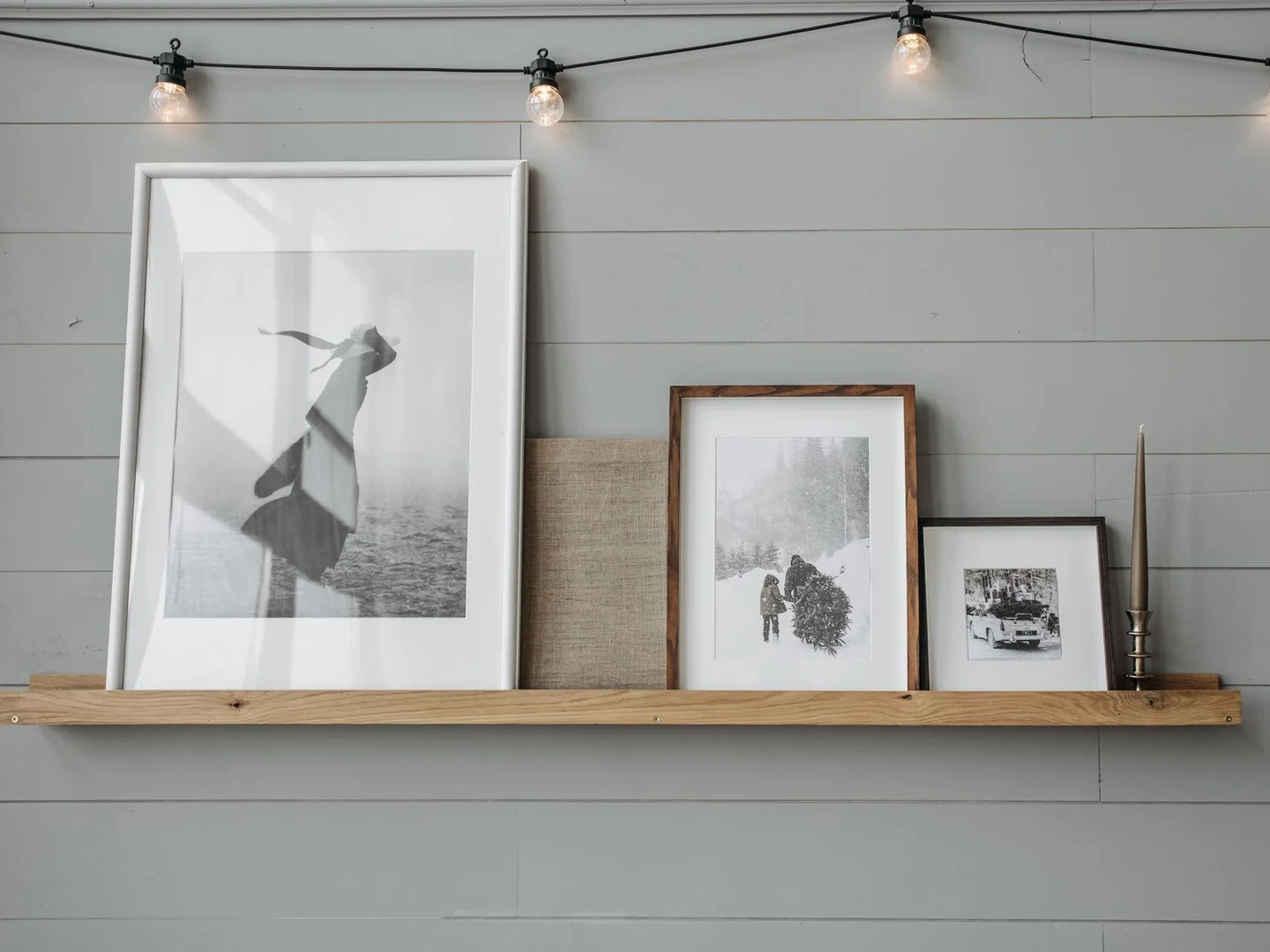
A picture ledge offers a little freedom: the pictures can move without leaving a new hole behind each time. That freedom disappears when every frame in the house ends up on the same narrow shelf. Before arranging anything, measure the usable depth behind its front lip. A chunky frame may stand on the ledge but lean too far forward to sit securely.
Check the shelf manufacturer's load limit and mounting instructions, including the fixings specified for your wall. The combined weight matters, not just the largest picture. Do not rely on decorative adhesive strips to hold a ledge unless the product is explicitly designed for that use and load. Keep leaning glass frames away from places where a child could pull them down or a passing shoulder could knock them.
Let one picture do most of the work
Choose the image you want to notice first. Put that frame slightly to one side rather than automatically centering it. Add a smaller piece beside it, then step back to the doorway. Two pictures can be enough. If the shelf still feels bare, test a third frame before adding little ornaments; tiny objects often create visual clutter without improving the arrangement.
Overlap frame edges only where the image beneath remains understandable. Covering the corner of a generous white mat is different from hiding a face or the end of a line of text. A postcard in a small frame can sit forward, with the larger picture behind, provided both remain fully supported by the shelf.
Use the wall as part of the arrangement
Leave a visible gap at one end. It gives your eye somewhere to rest and makes the display look chosen rather than stored. The gap does not need to match the other end. On a short ledge above a desk, a larger blank area may make room for the desk lamp below without placing every object on the same vertical line.
Try limiting the frames to two finishes already present in the room. Light wood and white might connect to a nearby chair and wall; black and brass may pick up the lamp and cabinet handles. The pictures themselves can be quite different. Repeated frame finishes provide enough connection without turning every print into a matching set.
Leave the arrangement alone for a day before buying anything to complete it. Look at it in daylight and with the room's usual lamps on. Glare may make a beautiful print unreadable from the sofa. Moving a frame a few inches, or choosing a different position for the ledge before mounting it, can solve more than another accessory would.