Keep board games complete on an ordinary shelf
Choose an arrangement that lets one game come out without unsettling the whole collection, and keep its small pieces contained.
Sort by the boxes you have
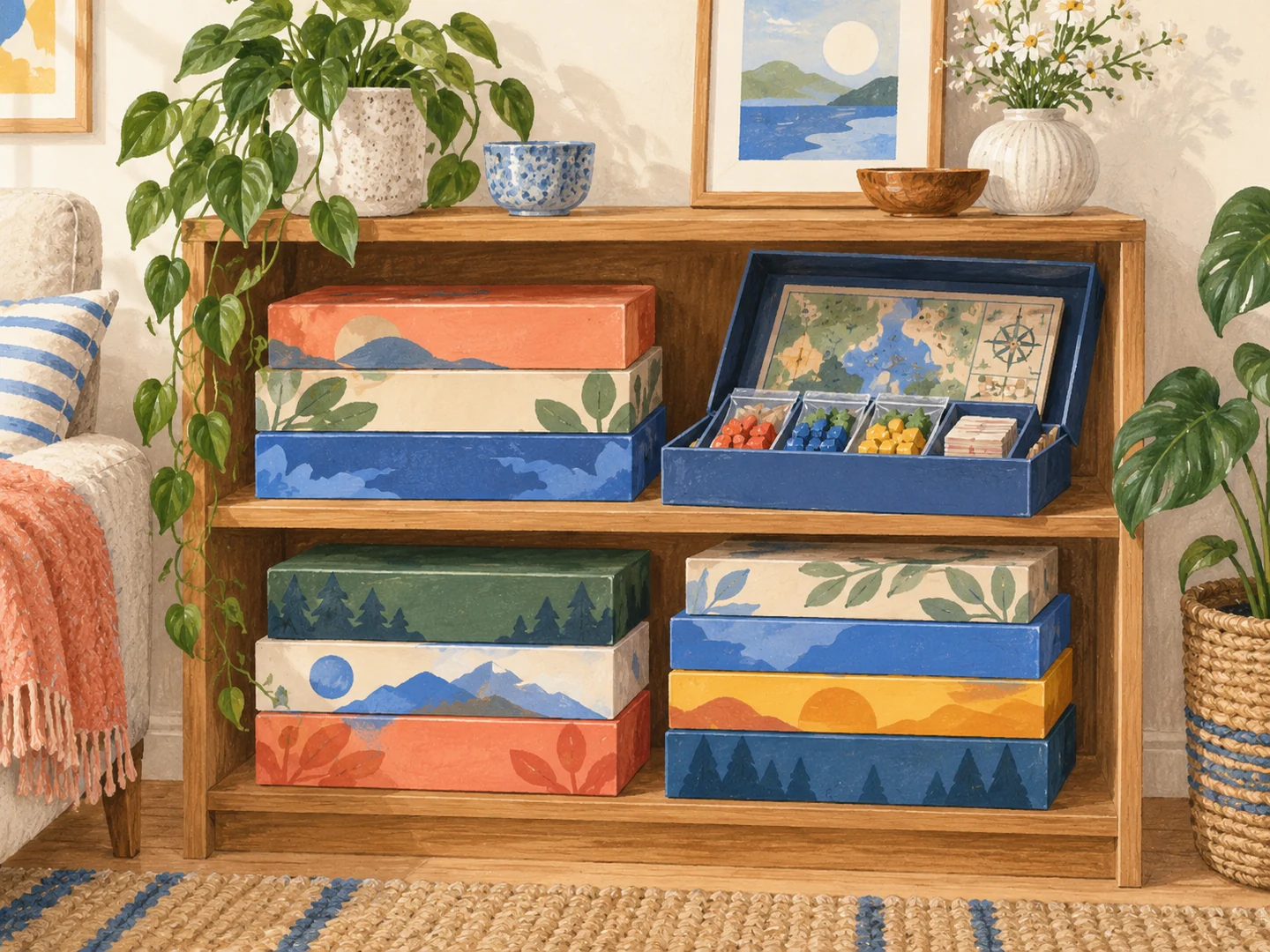
Board-game boxes rarely share one convenient size. Lay them out and group by shape before deciding on a shelf arrangement. Large flat boxes may stack well in a short pile, while sturdy upright boxes can work like books if their contents remain secure. Do not stand a loose-lidded box vertically just because it creates a tidy row.
Check expansion packs and alternate editions before combining boxes to save space. Some pieces may only belong to a particular version, and mixing them can make setup confusing. If you consolidate, preserve the rules and identify which components belong together. A smaller footprint is useful only if the next person can still work out how to play without reconstructing your storage decision.
Check the shelf's load capacity and the furniture's anchoring instructions. Keep heavy games where they can be lifted comfortably. Games intended for older children may contain small pieces that need storage away from younger siblings, regardless of where the family prefers to play.
Keep each game complete
Use the original compartments when they work. If a box has become a jumble, a few appropriately sized closed containers or bags can keep pieces together, with small parts inaccessible to children who should not use them. Avoid dividing a game into so many separate packets that setup becomes a lengthy unpacking exercise.
Put instructions with the game and label any replacement container clearly. Keep a note of genuinely missing pieces rather than expecting everyone to remember. If the game cannot be played without a missing part, repair or resolve that problem before returning it to the active shelf. A broken game at the front of the collection creates repeated disappointment.
Give frequently played games the easiest position
A game used every weekend should not sit beneath six heavy boxes. Place current favorites at a comfortable height and move rarely used titles to a less convenient section. Leave enough clearance to grip a box from both sides. Shelves packed with no spare space are difficult to use even when every spine faces outward.
Try pulling out the largest box while the shelf is full. If another game falls or its lid catches, reduce the stack or change the orientation. A divider may help some upright boxes, but the divider itself needs to be stable and suitable for the shelf. Matching storage boxes are not necessary if the original packaging still works.
After play, check the table and floor for pieces before closing the box. A quick count of the most easily lost components can prevent a future search. Return the game to its own space rather than balancing it across the top of the collection.
Occasionally choose whether unused games still belong in the household. Pass on complete, suitable games according to their condition, and avoid donating an unexplained box of missing pieces. Fewer playable choices are more inviting than a large shelf that needs an inventory before anyone can begin.