Divide storage fairly in a shared children's bedroom
Allocate storage by each child's belongings, reach and privacy needs rather than making every container identical.
Start with what is individual
Two children sharing a room do not necessarily own the same volume of clothes, books or hobby supplies. Lay out the categories before dividing the furniture in half. One child may need a longer hanging section; another may use more shallow drawers. Fairness can mean comparable access and clear ownership rather than exactly matching dimensions.
Ask each child what they most often cannot find and which possessions they do not want mixed. A small private drawer or box can matter more than a large decorative shelf. Keep shared items separate from personal items so every disagreement does not become a debate about whose side of the room an object belongs on.
Assign useful positions first
Everyday clothing should be reachable by the person expected to put it away. Less-used items can occupy a higher shelf accessible to an adult. Follow furniture anchoring instructions, and avoid arrangements that invite climbing to reach favorite belongings. Beds, toys and furniture should also be positioned with window-covering hazards in mind.
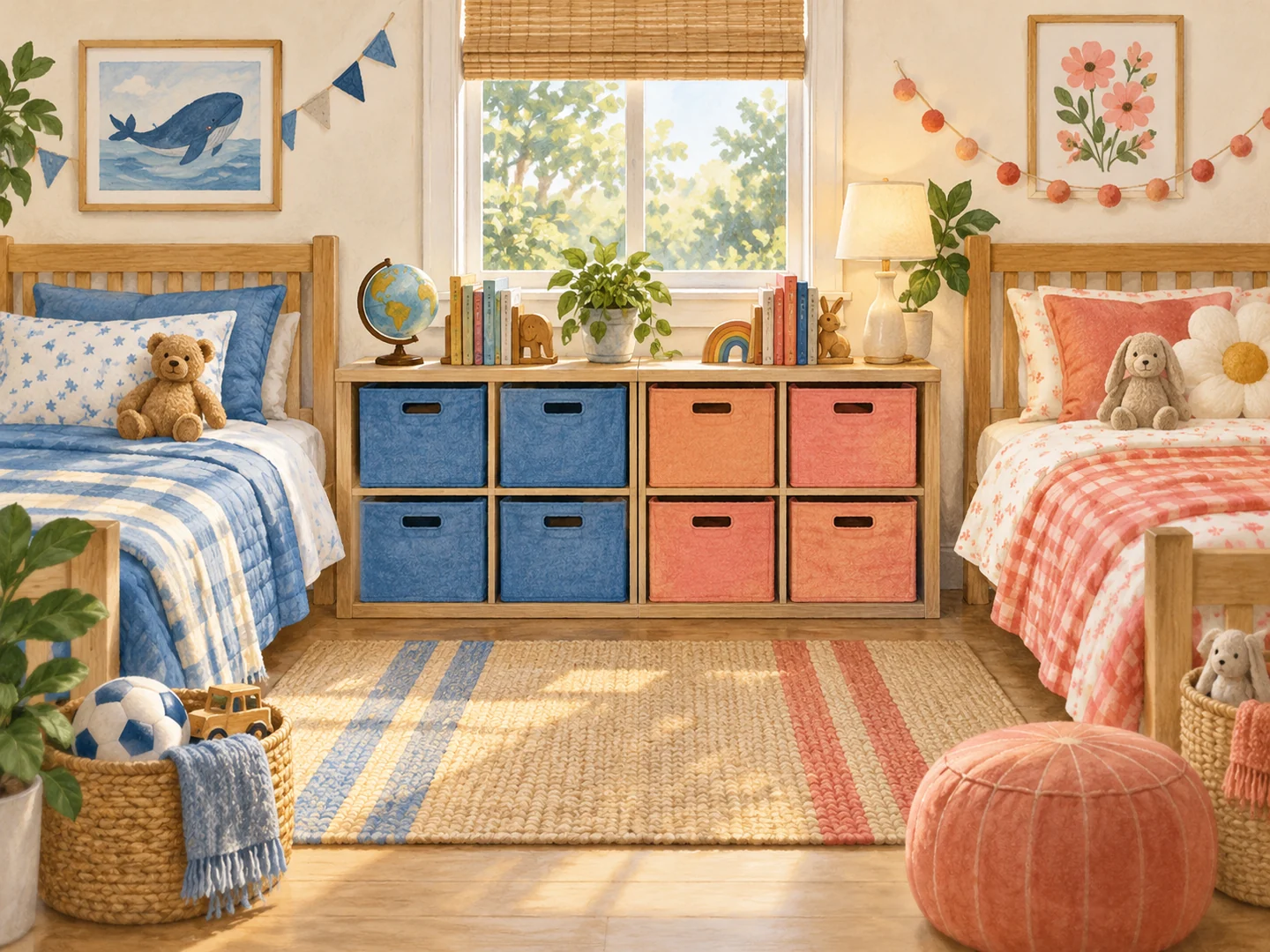
Use simple identifiers where they help: a name, a different basket color or a distinct drawer. There is no need to label every object. If two drawer fronts look identical, one clear marker may prevent repeated mix-ups. Let the children choose among workable options without making them responsible for solving the entire room layout.
Give borrowed possessions a return route. A shared basket for items found on the wrong side can help if both children understand its purpose, but it should not become a place for confiscation or unresolved arguments. Empty it together when needed. The arrangement is most useful when it supports ownership without making every ordinary mix-up a major event.
Reserve shared storage for things genuinely used together, such as a game collection or common art paper. Keep small-piece toys appropriate to an older child's age inaccessible to a younger sibling. A shared bedroom may still need some supplies stored elsewhere for supervised use; fitting everything into the room is not the only goal.
Give the boundaries some flexibility
A divider in a wide drawer can create two spaces, but it should not reduce both to awkward slivers. Try the real contents before buying a full organizer set. Leave a little spare capacity so a new shirt or book does not immediately cross the boundary. If one category grows, discuss the change rather than letting overflow silently take over another child's space.
Separate laundry from clean clothing with an arrangement the children can understand. Two small hampers may help where sorting by person is useful, while one shared hamper may be simpler if washing is combined. The best choice follows the household's laundry routine, not an assumption that every shared room needs duplicate equipment.
Review at a meaningful change
School transitions, growth spurts and new interests are useful moments to reassess the storage. A layout that worked for a preschooler and an elementary-school child may not suit them several years later. Remove outgrown items before interpreting a crowded room as a need for more furniture.
Keep the review concrete. Ask whether a drawer opens fully, whether books can be reached, and whether personal items are staying separate. These questions are easier to resolve than whether one side looks "better." A room can have different-looking storage on each side and still feel fair when both children can use their own space comfortably.