Decide whether an entry bench has enough usable storage
Open the storage in your mind before buying the bench. The lid, doors and daily shoe pile all need space that the product's width does not reveal.
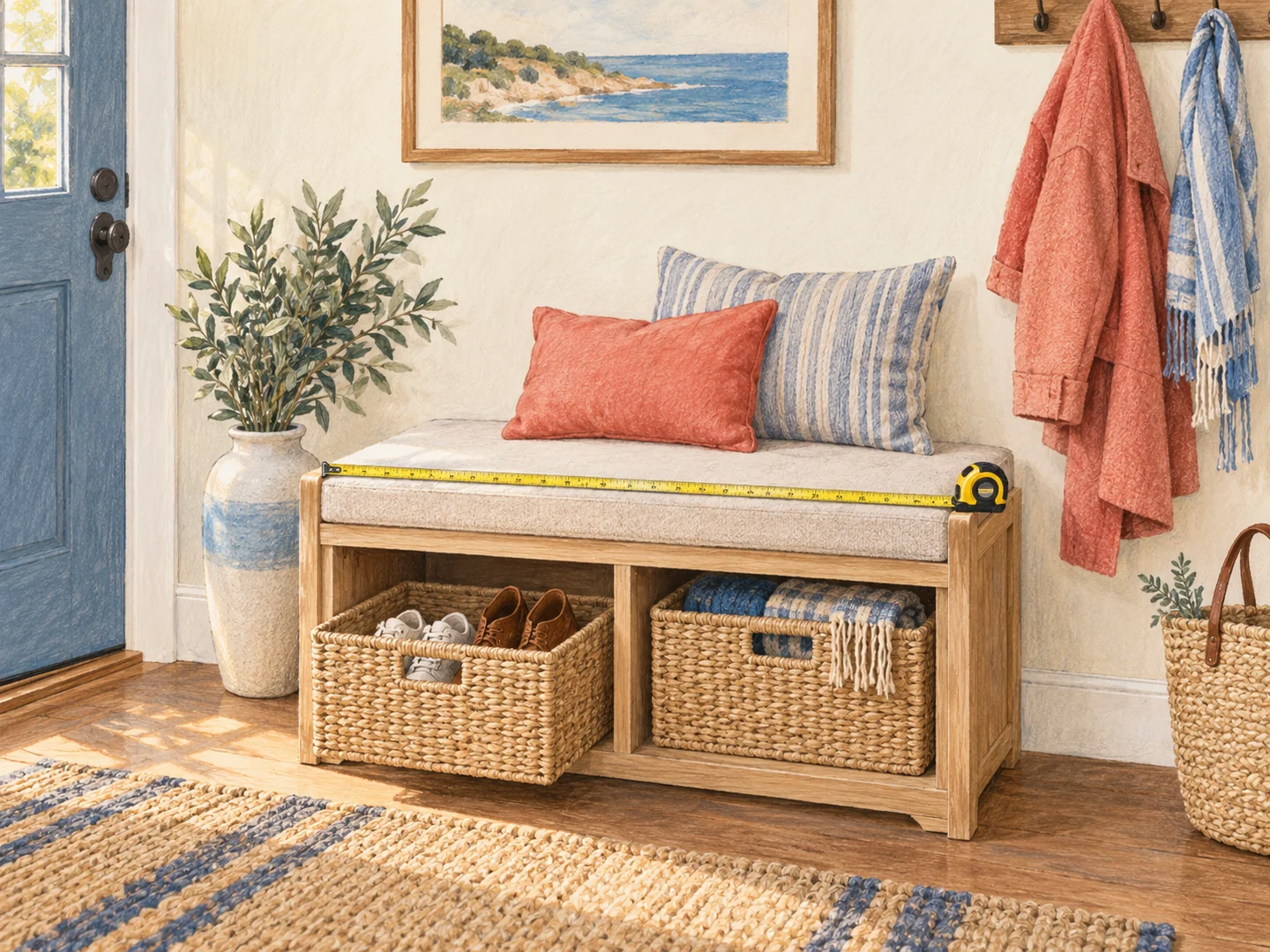
An entry bench has two jobs that can compete: giving someone a place to sit and giving belongings a place to disappear. A hinged lid can provide a large cavity, but anything resting on top must move before the storage opens. A row of cubbies can be easier to use, yet large boots may fit none of them. Start with what needs storing and how often it comes out.
Map the entry as it is used
Measure the available wall space, the bench depth and the route past it. Include the front door's swing, nearby closet doors and the point where someone stands to remove a coat. Tape the footprint on the floor for a day. If bags already land in that exact route, a bench may become another place for them to obstruct it rather than a solution.
Check the height and depth of the seat against a chair you find comfortable. A shallow decorative ledge can look like a bench without feeling useful for putting on shoes. Read the product's intended use and weight limit. A storage chest is not necessarily designed as seating, even if a photograph places a cushion on it.
Look inside the compartments
Ask for internal dimensions when the listing gives only overall measurements. Side walls, dividers and hinges reduce the usable space. Measure a pair of the largest shoes you intend to store, positioned as they would sit in the compartment. Include the space needed to grasp them. A cubby that fits a shoe precisely can still be awkward when another pair is beside it.
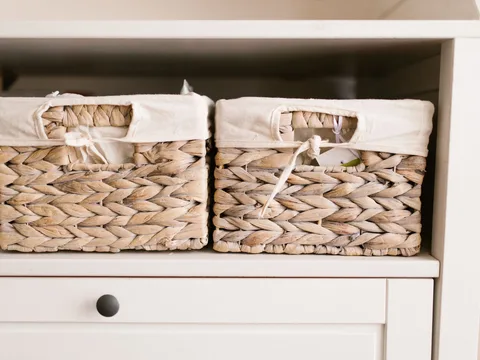
If baskets are supplied, check whether they can be removed while someone is sitting on the bench. If doors open outward, leave enough clearance for both the door and the person crouching in front of it. For a lift-up design, follow the maker's safety guidance for the lid and do not improvise a prop to keep it open.
Try dividing the intended contents into daily and occasional use. Everyday shoes need quick access; spare gloves or seasonal accessories can tolerate a slower opening. A bench with two open bays and a separate nearby hook may serve those habits better than a single large hidden cavity. The storage does not all have to be inside the seat.
If several people arrive together, consider where the person waiting will stand. A bench deep enough for comfortable sitting can still leave the entry crowded if it occupies the only passing space. Test the taped footprint while someone sits in a chair at the proposed position. That small rehearsal helps separate a useful landing place from a piece of furniture that merely fills the wall.
Consider what will happen with damp or dirty footwear. An easy-to-remove tray may suit an open shelf; soft fabric bins can be less convenient for that job. Keep everyday shoes separate from clean scarves or gloves rather than expecting one large cavity to organize both.
The most useful bench may store fewer things than the largest model you can squeeze into the space. A comfortable seat, two accessible shoe spaces and room to walk past can improve the entry more than a bulky unit with impressive capacity on paper. Judge it with the door open and a person sitting down, because that is when its dimensions become real.