Turn a patterned tea towel into wall art
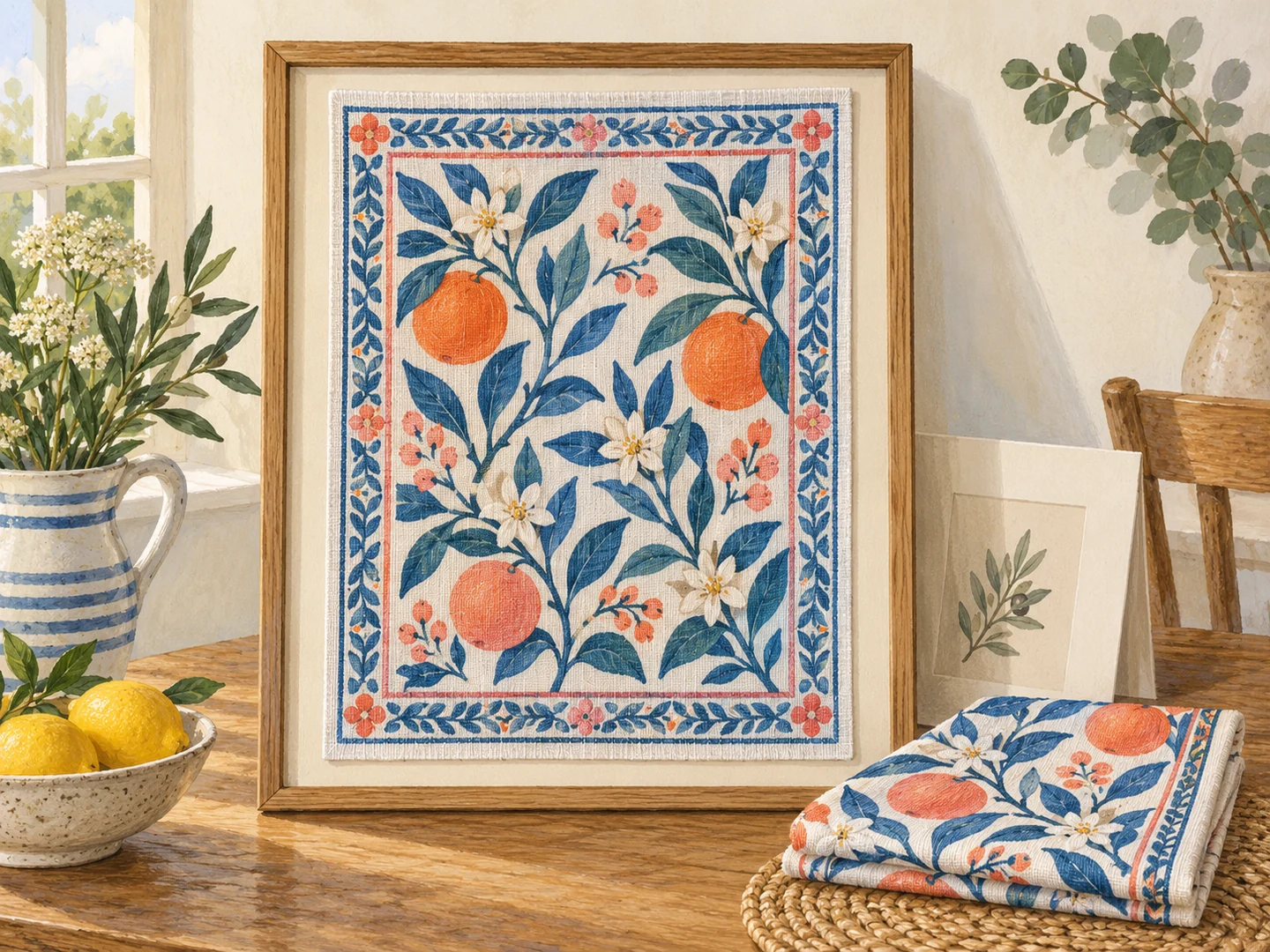
A tea towel with a strong pattern can become a generous piece of wall art when the fabric is supported without being stretched out of shape.
Check the design at frame size
Spread the towel flat and mark a possible frame opening with strips of paper. Some patterns are strongest as a cropped detail; others need their border or lettering intact. Look at the design from several feet away. A busy print that is charming in the hand may lose its shape on the wall, while a large simple motif can hold its own.
Look for a visual center rather than automatically centering the towel's outer rectangle. A printed scene may place its main subject off to one side, and a border may be uneven because the cloth was made for use. Paper strips can help you test several crops. Take a quick photograph of the preferred view so the alignment survives the move to the mounting board.
Use a towel in sound condition and prepare it according to its care label. Press out folds before mounting, allowing the fabric to cool and dry fully. If it is a valuable textile or a family keepsake, seek conservation framing advice rather than using household glue or a staple gun on it.
Support the fabric, not just the corners
A suitable mounting board keeps the towel from sagging inside the frame. Choose a frame deep enough for the fabric, board and glazing without forcing its backing shut. A thick folded hem may need extra depth even when the center of the towel is thin. Test the stack before committing to a frame that only accommodates paper.
For an ordinary decorative towel, use a reversible textile mounting method appropriate to the material. Lightly stitching it to a suitable support can be preferable to covering the back in adhesive, but the method should not pull the weave out of square. Work from the center toward the edges, checking the front regularly. Stripes and checks make uneven tension easy to spot.
Do not cut off excess fabric simply because it is hidden. If the frame can accommodate it neatly, fold it behind the support without creating a bulky ridge. A textile that can later return to use has more options than one trimmed to an exact opening. Avoid packing the frame so tightly that the fabric presses hard against the glass.
Let the frame be quiet
Try a narrow wood or plain painted frame before choosing something ornate. The towel already brings pattern, texture and often a strong border. A little visible backing around it may help, especially if the towel's edges are not perfectly straight. That irregularity can look intentional when it is given breathing room.
Choose a position away from persistent moisture, grease and strong sunlight. A kitchen-adjacent dining wall may be a better home than directly above a cooktop. Use hanging hardware appropriate to the complete frame's weight and keep glazing out of places where it is likely to be knocked.
Before closing the frame, inspect for loose threads and dust. A tiny thread on the inside of the glass becomes surprisingly noticeable once the picture is hung. Photograph the placement if you want to be able to reassemble it after cleaning or a future frame change.