Refresh a wooden step stool without painting the treads
Give the sides of a sound wooden step stool a new color while keeping its working surfaces and safety features intact.
Inspect it as a step before treating it as furniture
A step stool carries a person, so its condition matters more than its color. Set it on a level floor and check for movement, loose joints, splits and missing feet. Look for the manufacturer's load limit and intended use. Do not decorate a stool that rocks or attempt to hide structural damage under filler and paint. A decorative stool is not automatically suitable for standing.
If the existing finish is old or unknown, investigate it before sanding or scraping. Older coatings may contain lead. The EPA's guidance on lead exposure includes refinishing old furniture, and testing or professional advice may be needed before disturbing the surface. Choosing a newer unfinished stool with clear instructions can make this project much more straightforward.
Protect the parts that do the work
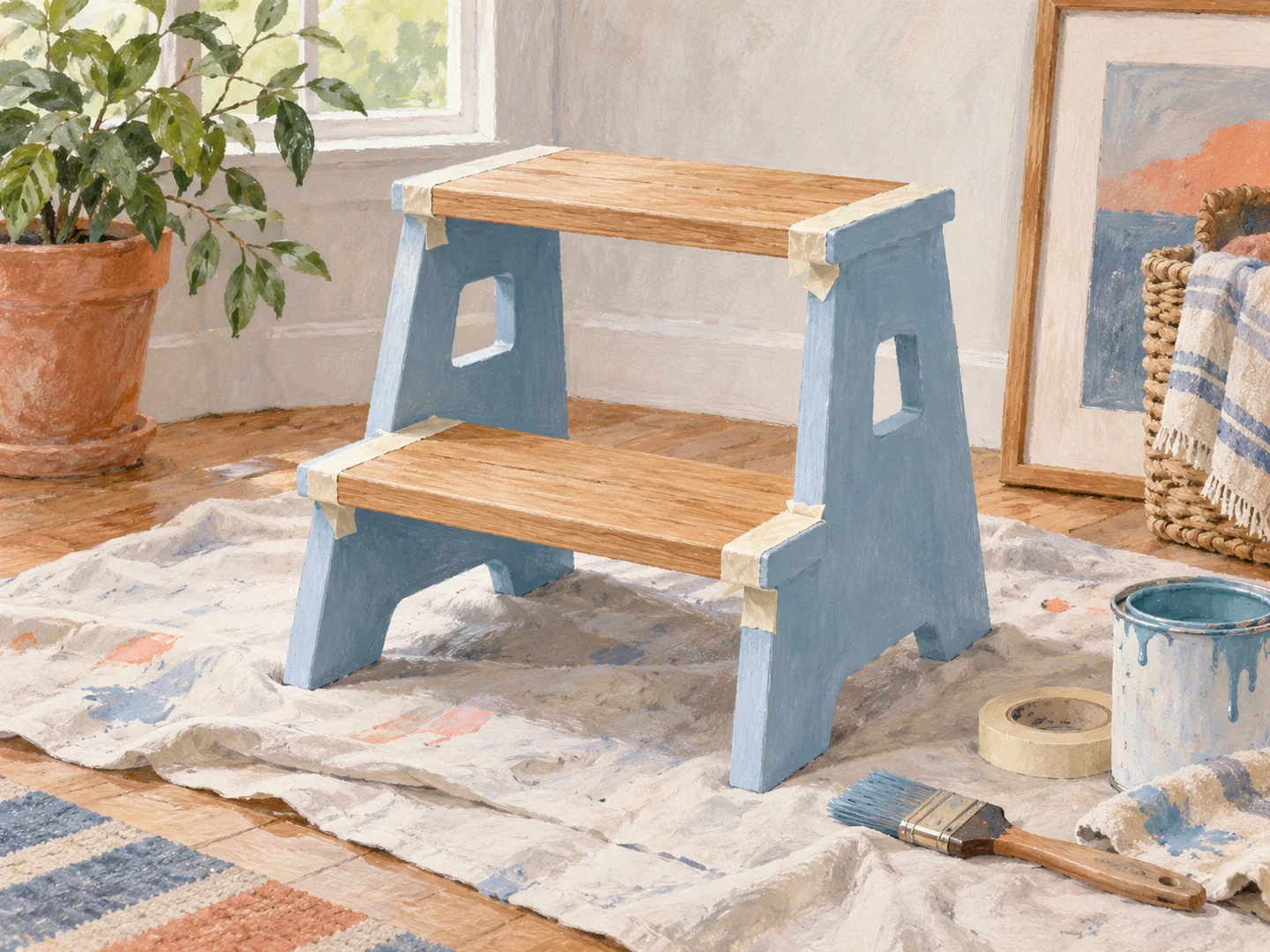
Leave the treads, nonslip surfaces, rubber feet, hinges and locking mechanisms unchanged. Cover labels that need to remain readable. Painting around these parts gives the stool a refreshed appearance without putting an untested coating where feet must grip. If the maker prohibits refinishing or if masking would interfere with operation, select a different project.
Clean the paintable surfaces with a product compatible with the wood and finish. After they are dry, follow the selected primer and paint system's preparation instructions. Work in a ventilated area, keep children away from the work zone and use the protective equipment required by the product. A small angled brush reaches beside a tread more easily than a large loaded brush.
Before masking, photograph the unaltered stool from above and below. The record helps identify which surfaces were originally textured and where labels or moving joints sit. Use it when removing the protection at the end, checking that no grip feature has been accidentally coated. This is especially useful on a folding stool with several small contact points that are easy to overlook while concentrating on color.
Apply thin coats to the sides and lower rails. Check the underside for runs before each coat dries, since paint often collects where a vertical leg meets a crosspiece. Keep paint out of the joints and moving parts. Lift the stool only at an unpainted area or wait until it can be handled; fingerprints in a partly cured finish are harder to correct than a missed spot.
Wait beyond the dry-to-touch stage
The can may give several different times: recoating, handling and full cure. They are not interchangeable. Follow the full return-to-use guidance before putting the stool back into a busy kitchen or bathroom. Remove masking carefully, then inspect every tread and foot for paint, adhesive residue or damage.
Set it in its normal place and check that it still sits firmly. A step stool needs enough room for its whole base, not two feet balanced on a bathmat and two on tile. Store it where it does not narrow a doorway or provide unsupervised access to hazards. A color update does not make the stool childproof or change the supervision it requires.
One color on the side panels is often sufficient. Keeping the wood visible on the top gives a clear visual distinction between the decorative parts and the standing surface, while avoiding an elaborate pattern that needs touching up after every knock.