Cut a paper garland that hangs evenly
Make a short, balanced paper garland by planning the shape, spacing and hanging points on a table first.
One repeat is enough
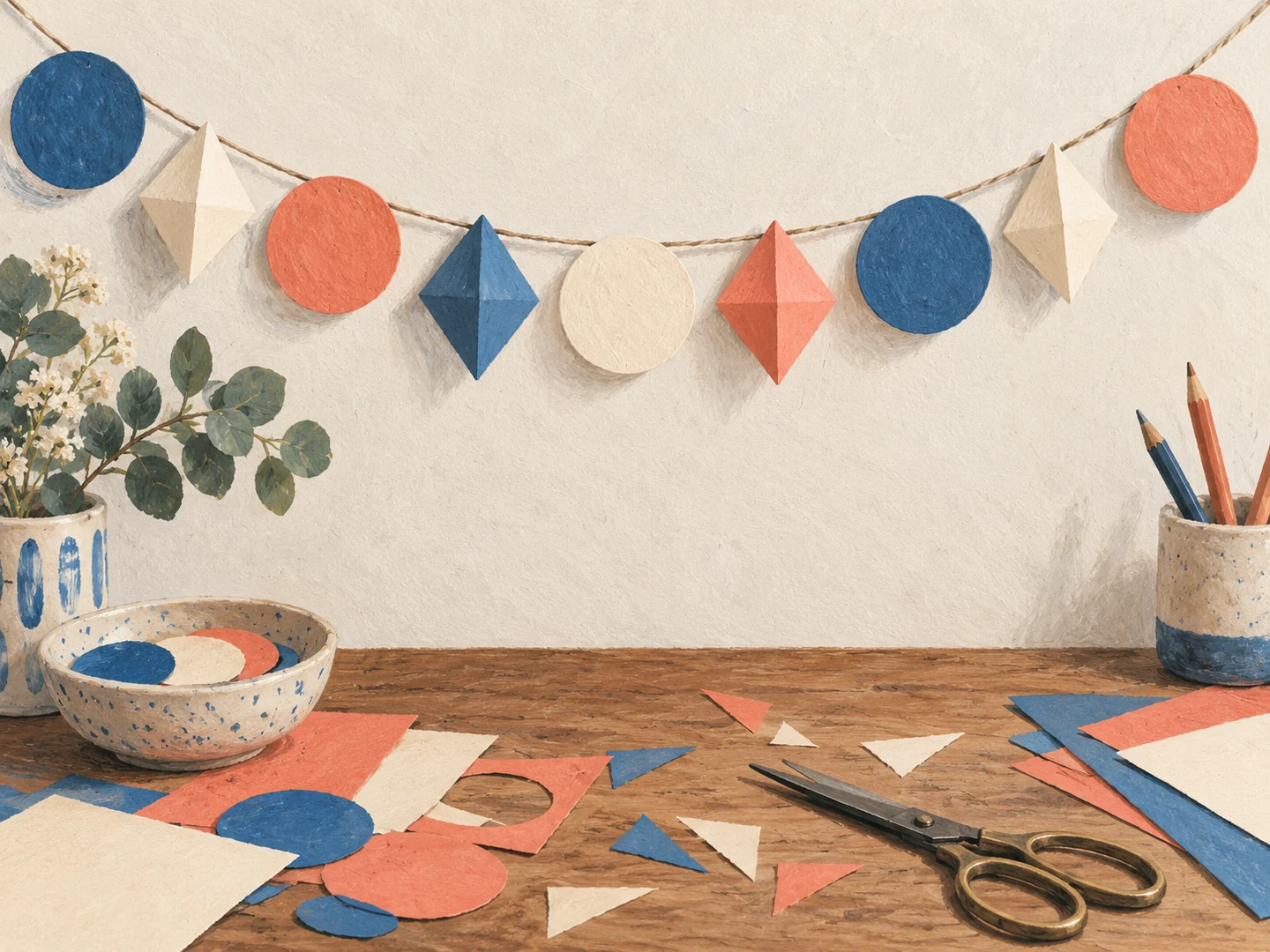
A garland becomes easier to cut and hang when it uses one main shape. Try simple pennants, rounded tabs or circles rather than a different outline for every piece. Choose paper sturdy enough to hang without curling immediately, but not so heavy that it pulls the line into a deep dip. A few colors from the room give plenty of variation.
Make a template from scrap card. Cut one full-size piece and hold it where the garland will go before cutting the rest. Small shapes can disappear over a wide wall; large ones can overwhelm a narrow bookcase. Think about the view from the doorway, not only how the paper looks in your hand.
Mark the spacing off the wall
Lay the cord or tape on a table and mark its usable length, leaving enough at both ends for the intended attachment. Arrange the shapes along it without fastening them. Equal gaps usually look more settled than placing pieces by eye while the garland is already hanging. If the last gap is much smaller, adjust the whole row rather than squeezing in the final piece.
For folded pennants, crease each piece over the line and secure the two paper layers with a suitable adhesive. For punched shapes, make holes in consistent positions and check that they are far enough from the edge not to tear. Keep small scraps and sharp tools away from young children, and let any adhesive set before lifting the strand.
For a two-sided location, such as an open archway, consider what the backs of the pieces will show. Printed packaging or pencil marks that are hidden against a wall become visible from the next room. Use paper with an acceptable reverse or pair suitable lightweight layers, checking that the added weight does not change the way the strand hangs.
Lift the garland by both ends to see its natural curve. A long strand may need an additional support, but adding more paper to the center will only make that section sag further. Shorter lengths are often simpler to place and store. Avoid attaching anything to electrical cords, lights or hot surfaces.
Hang it where it stays decorative
Keep paper garlands away from flames, heaters, cribs, beds and areas where children or pets could reach a loop or pull the strand down. Use attachments suited to the wall and the garland's weight. A decoration above a busy doorway should not droop into passing heads or catch when the door opens.
After hanging, stand back and look at the outer ends. If they point in different directions, rotate the final paper pieces rather than recutting the whole set. Small adjustments at the ends often make the middle look more deliberate.
To store it, lay the shapes flat and wrap the line loosely around a piece of card without crushing them. Write the room or occasion on the card. A simple garland that survives another outing is more useful than one packed so tightly that every piece has to be remade.