Frame pressed flowers without crowding the glass
Give dried stems enough space and a suitable backing so their shapes remain the focus of the frame.
Begin with dry, flat material
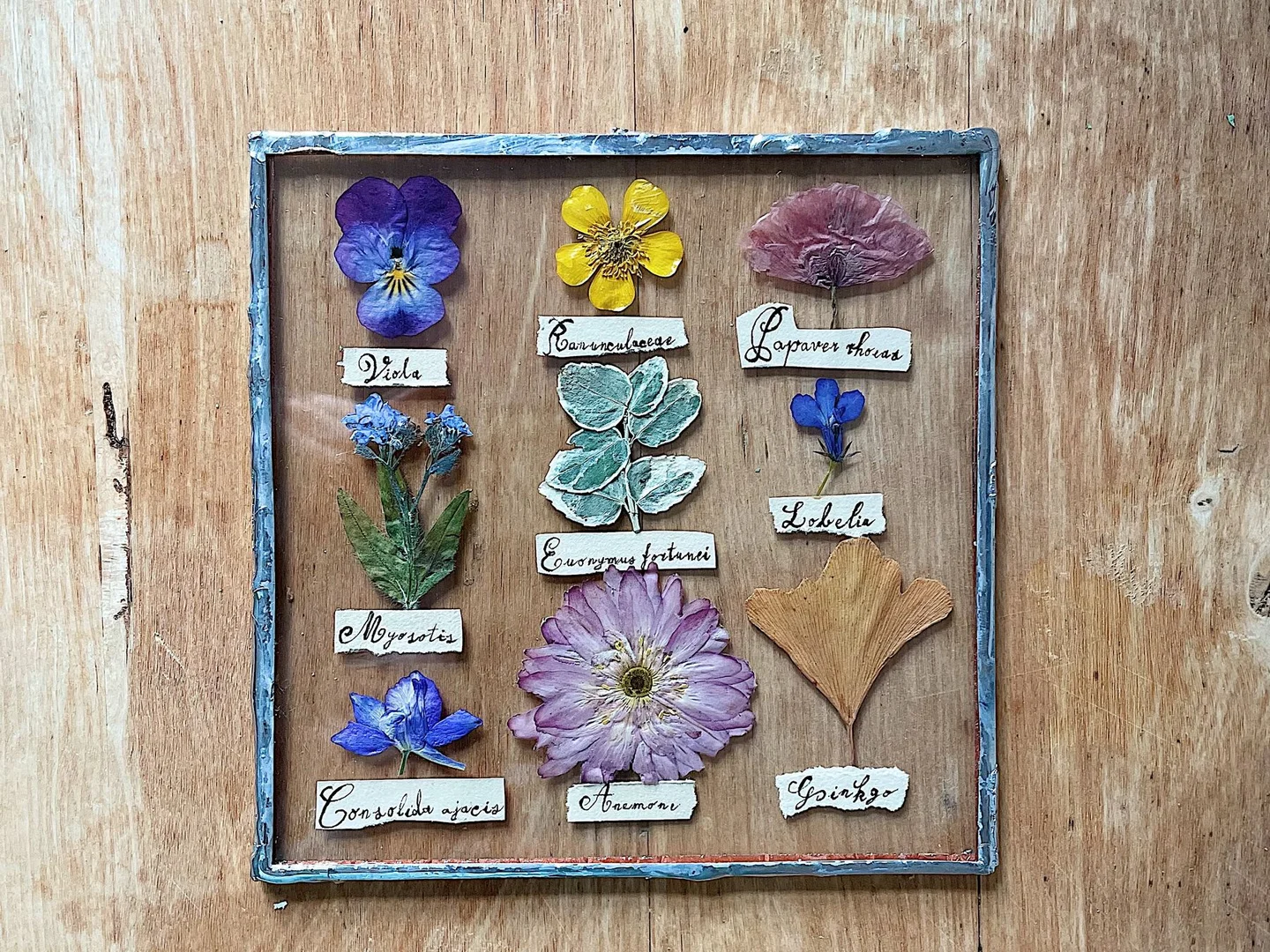
Pressed flowers look delicate because their stems and petals form an irregular line. A frame packed edge to edge with blooms can lose that quality. Choose a few fully dried specimens and lay them on plain paper before deciding on a frame. Discard anything damp, moldy or still thick enough to press against the glazing. Do not enclose fresh flowers and expect them to dry inside.
Use plants you can identify and handle appropriately. Avoid collecting protected plants or taking material from land without permission. Garden prunings or a flower from a purchased bouquet can supply enough for a small picture. Keep unknown or irritating plant material away from children and pets during the project.
Arrange the stems before attaching them
Start with the longest stem, then add one or two shorter pieces at different heights. Turn them slightly rather than placing every flower upright in a row. Leave open backing around the outer edges so the arrangement does not seem trapped under the frame. A photograph of the loose composition helps when you lift the pieces to attach them.
For a conventional frame, use a backing and mounting materials intended for paper crafts or preservation, as appropriate to how much you want to protect the piece. Test a tiny amount of suitable adhesive on an expendable stem. Too much glue can stain the backing or spread visibly around a petal. Handle brittle flowers with care, supporting them from beneath rather than pulling at a thin stalk.
Check the backing color under the actual flowers. Pale petals can disappear against white, while a dark board may make a fragile brown stem look heavier than intended. Try two or three scraps before mounting. A warm gray or light cream sometimes separates the plant from the background without introducing another obvious color, but the specimen itself should guide the choice.
A frame with enough depth or a suitable spacer keeps the flowers from being crushed against the glass. Do not force a standard frame closed over material that is too thick. If you want the floating look of two transparent panels, use a frame designed for that arrangement and follow its assembly instructions; improvised loose glass is not a good substitute.
Expect the colors to change
Pressed flowers can fade. Choose a place away from strong direct sunlight and damp conditions, and enjoy the shapes as well as the original color. A pale stem against warm white paper may remain attractive after a bright petal has softened. For a keepsake you cannot replace, consider displaying a photograph of it and storing the original more carefully.
Clean the glazing before final assembly so you do not have to reopen the frame to remove a fingerprint. Check the back and hanging hardware, then place the finished picture where it will not be knocked or pulled down. A small framed arrangement on a wall can be easier to protect than a glass frame leaning on a busy table.
There is no need to fill the remaining space with a quotation or date. If the flower has a story worth recording, write it on a separate note at the back. The front can simply show the plant.